


I spent time with Weezer-Sonic Bloom as an everyday listening app rather than treating it like a full streaming service. Its appeal is straightforward: it is a free entertainment app from Sangri Solutions that focuses on playing audio stored on the device, with support for MP3, WAV, FLAC, and other sound formats. That offline-first approach immediately gives it a different feel from apps built around subscriptions, recommendations, accounts, and constant internet access.
My first impression was that the app makes the most sense for people who already keep music, recordings, podcasts, sound effects, or other audio files locally. If your main habit is opening a streaming platform and searching for something online, this will not replace that routine. If you have a personal collection and want a simple way to play it without depending on a connection, the idea is much more relevant.
The app is listed as free and carries a Teen content rating. It has reached over a million installs and holds a 4.0 average from around eight thousand ratings, which suggests that it has found a substantial audience while still leaving room for mixed experiences. I would describe it as a practical local audio tool with an unusual name, not as a complete entertainment ecosystem.
How Weezer-Sonic Bloom fits into real listening habits
An offline player with a clear everyday purpose
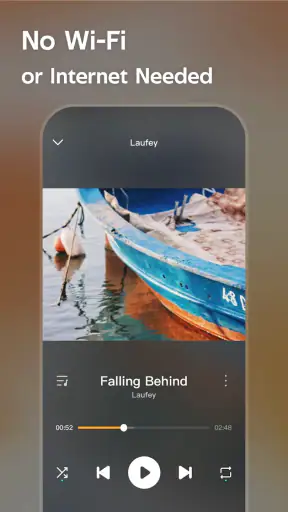
The most useful way to understand this app is to picture a normal commute, a flight, a weak-signal area, or a place where mobile data is inconvenient. I can see myself preparing a folder of albums or spoken recordings before leaving home, then using the player without worrying about buffering or a changing connection. That is a modest benefit, but it is a meaningful one when reliability matters more than discovery.
Offline playback also changes how I think about privacy and control. A local player does not need to be the center of my listening life. I can keep files on the phone, choose what to open, and stop using the app without losing access to a cloud library. That does not automatically prove anything about the app’s broader data practices, so I would still check the permission prompts and privacy information shown on my device before granting access. What I can say from the product’s stated purpose is that its core use case does not depend on an online music catalog.
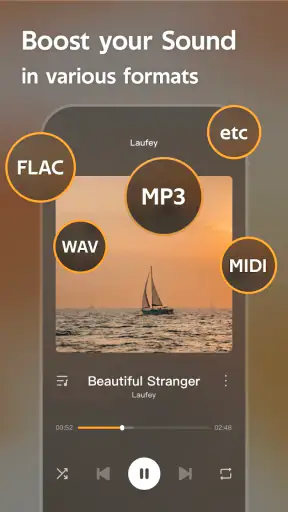
The support for several common formats is another practical advantage. MP3 is familiar and lightweight, while WAV and FLAC are more likely to appear in higher-quality collections, recordings, or files exported from other software. In my experience, format compatibility matters most when a person has accumulated audio from different sources and does not want to convert everything before listening.
That said, “supports all sound formats” should not be interpreted as a guarantee that every unusual file behaves perfectly on every phone. Audio containers, codecs, tags, and device-level playback support can still affect the result. I would test a few representative files from my own collection rather than assuming that one successful MP3 tells me how a complicated archive will behave.
What the developer and popularity tell me—and what they do not
Sangri Solutions is the developer behind the app. The current version is 1.3.5, and the app was released on August 8, 2025. Those details help identify the product I am reviewing, but they are not a substitute for checking the actual permission requests, update notes, or privacy disclosures presented in the store and on the device.
The rating gives me a useful starting signal, not a final answer. A 4.0 average from around eight thousand ratings indicates that many people find the app worthwhile, while the existence of hundreds of written reviews means there is enough user feedback to look for recurring complaints. I would read recent comments with a specific question in mind: are problems related to file scanning, particular formats, background playback, or device compatibility? Those distinctions matter much more than the average alone.
The install count also shows that this is not an obscure experiment with no visible audience. Still, popularity cannot confirm that the app requests only necessary access, avoids unnecessary collection, or offers detailed account controls. For a local audio player, I would pay special attention to whether storage or media access is explained clearly and whether the app lets me make an informed choice instead of pushing me through vague prompts.
Permission awareness is part of the listening experience
A player that needs to find local audio may require access to media or files, depending on the operating system and how the app is designed. I would expect to see a permission request connected to that function, but I would not treat any permission as harmless merely because the app plays music. My habit is to read the wording, grant the narrowest access available, and revisit the setting if I stop using the app.
This is especially important on a phone containing personal recordings, voice notes, downloaded lectures, or work material. A music player may be convenient, but the library it can see could include much more than music. Before importing or scanning anything, I would organize sensitive files separately where possible. That simple step gives me more control over what appears in the player and reduces accidental exposure inside a broad media library.
I also look for visible choices during setup and normal use. Can I select a particular folder, or does the app expect broad access? Can I remove access later from system settings? Does the interface make it obvious which files are being displayed? These are the questions I would ask while installing, because trust is built through understandable choices rather than through a polished icon or a high install count.
Three workflows that make the app more useful
My first recommended workflow is a travel collection. I would create one clearly named folder for the audio I want offline, copy only those files into it, and then open the player after granting the relevant media access. This keeps the library focused and makes it easier to notice whether the app is reading the intended material. It also avoids turning a quick listening session into a search through screenshots, recordings, and unrelated downloads.
The second is a format check before relying on it away from home. I would test one MP3, one WAV, and one FLAC file, then try pausing, resuming, skipping, and leaving the app. This is more useful than testing only the most common file in the collection. If one format behaves differently, I learn that before a flight or a long drive, when troubleshooting is inconvenient.
The third is a privacy-oriented cleanup routine. After importing or locating files, I would review which folders are visible and remove audio I no longer need from the device or move private recordings outside the selected listening area. A local player can reduce dependence on online services, but it does not make a phone’s contents automatically private. File organization remains the user’s responsibility.
These workflows are not flashy features, and I would not claim that the app provides a dedicated system for each one. They are practical ways to use a local player carefully, based on the formats and offline purpose associated with this app. They also reveal the main trade-off: the more control I want over my library, the more effort I may need to spend organizing it myself.
Where it feels better than streaming alternatives
Compared with a typical streaming service, the strongest advantage is independence from a catalog and a connection. I do not need to search for an album that may have disappeared, wait for a recommendation engine, or manage a subscription simply to play a file I already own. For personal recordings and uncommon audio, a local player is often the more direct option.
There is also less pressure to hand over the shape of my listening habits to a large online platform. I would still inspect this app’s own permission and privacy screens, because offline playback alone does not answer every data question. But the basic interaction is more contained: choose a file, play it, and continue without building a profile around every listen.
The trade-off is discovery. Streaming apps are usually much better at finding new artists, generating playlists, synchronizing libraries across devices, and combining music with social or editorial features. Nothing in the stated purpose of this app suggests that it is designed to compete in those areas. If I want a constantly refreshed catalog, personalized recommendations, or seamless cloud synchronization, I would choose a different category of product.
It also differs from a desktop media manager. A desktop program may offer richer tagging, batch editing, library rules, or detailed audio tools. On a phone, the advantage is convenience: I can carry the collection with me. The disadvantage is that correcting messy filenames or incomplete tags may be less comfortable, and the app’s usefulness depends heavily on how tidy my files already are.
Who should use it and who should skip it
I would recommend trying it if you keep audio files on an Android device, need playback without internet access, or regularly handle more than one common audio format. It may also suit students with recorded lessons, musicians checking exported files, travelers preparing a personal collection, and listeners who simply prefer to own and organize their files instead of relying on a catalog.
I would be more cautious if your library is mostly in a streaming account, if you expect advanced music management, or if you want a polished social listening experience. The app’s offline focus is a strength only when local files are part of your routine. For someone who never downloads audio and wants instant access to a huge online selection, installing it may add another player without solving a real problem.
People with sensitive recordings should also take a deliberate approach. I would not grant broad access automatically, and I would review the app’s visible controls before importing a large collection. The right question is not simply whether the player works; it is whether its access model feels understandable enough for the files I plan to expose to it.
Small frictions worth considering before committing
A local library can be less convenient than a cloud service when files are scattered across several folders. If the app does not present the collection exactly as I expect, I may need to rename files, move them, or adjust my organization outside the player. That is not necessarily a flaw in this particular app, but it is a real cost of choosing local playback over a managed online library.
Format support is valuable, yet it can create expectations. FLAC and WAV files can take more storage than compressed audio, so a large high-quality collection may compete with photos, videos, and other phone content. I would check available storage before copying everything locally. For a short trip, selecting a smaller collection is usually more sensible than filling the device with files I will not hear.
The Teen rating is another reason I would not treat the app as automatically suitable for every household situation. The rating describes the app’s content classification, while the audio files themselves come from the user’s device and may have their own subject matter. Parents or guardians who share a device should consider both the app rating and the content stored locally.
Finally, I would keep expectations realistic about updates. Version 1.3.5 identifies the current release I reviewed, but a player can behave differently after an operating-system update or a future app change. If playback is important for travel or work, I would test it shortly beforehand rather than discovering a compatibility issue at the worst possible moment.
My cautious verdict on trust and control
My overall view is favorable, but deliberately limited. The app has a clear use case, costs nothing to try, supports widely used audio formats, and is aimed at playback that can work without an online music catalog. Those qualities make it a sensible candidate for anyone whose listening collection already lives on the phone.
What earns my confidence is not the install figure or the rating by itself. It is the possibility of keeping the listening workflow simple and user-directed: I choose the files, I decide what belongs on the device, and I can review access through the operating system. At the same time, I would not make claims about data handling beyond what I can verify from the app’s permission prompts and privacy disclosures. I would inspect those details before giving it access to a large or sensitive collection.
In practical terms, I would install it for offline albums, personal recordings, and format testing, then begin with a small folder rather than my entire storage. I would grant only the access needed for that test, check how the library appears, and remove permission later if the experience no longer suits me. That approach gives me a useful answer without asking me to trust more than I can see.
My recommendation is simple: choose Weezer-Sonic Bloom when local, offline audio is the problem you need to solve. It is not the right replacement for a streaming subscription, a cloud-synced library, or a professional audio workstation. But for a free Android entertainment app from Sangri Solutions that puts existing MP3, WAV, FLAC, and other audio files within easy reach, it offers a focused alternative—provided I remain attentive to permissions, file organization, and the limits of what a local player is designed to do.


